
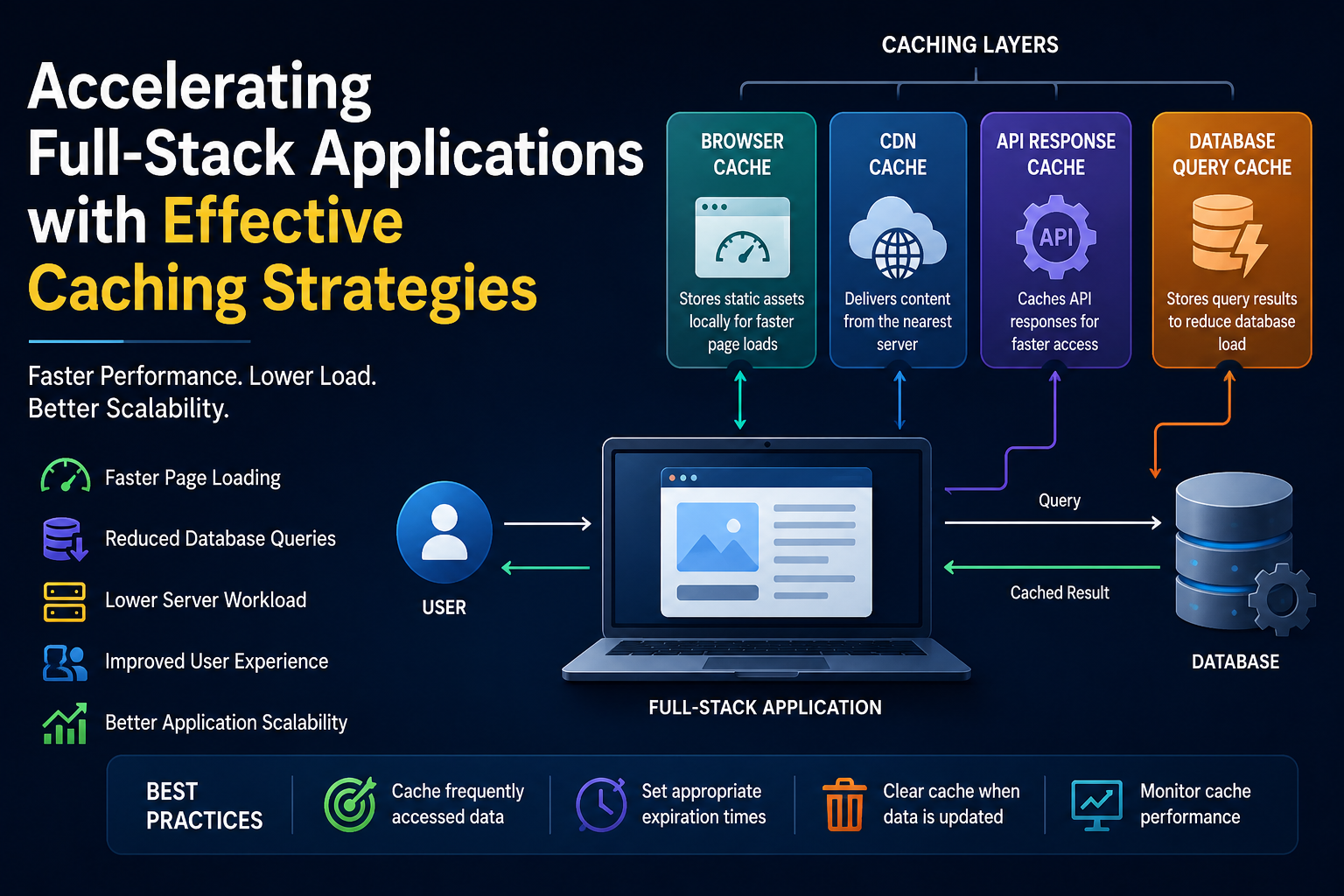
As web applications grow in complexity, delivering fast and responsive user experiences becomes increasingly important. One of the most effective ways to improve application performance is through caching. Instead of repeatedly fetching the same data from the database or external services, caching stores frequently accessed information temporarily, allowing applications to respond much faster.
Implementing the right caching strategy reduces server load, minimizes response times, and helps applications scale efficiently as traffic increases.
What Is Caching?
Caching is the process of storing frequently used data in a temporary storage location so it can be retrieved quickly without repeating the original computation or database query.
Rather than generating the same response multiple times, the application serves the cached data, resulting in faster performance and lower resource consumption.
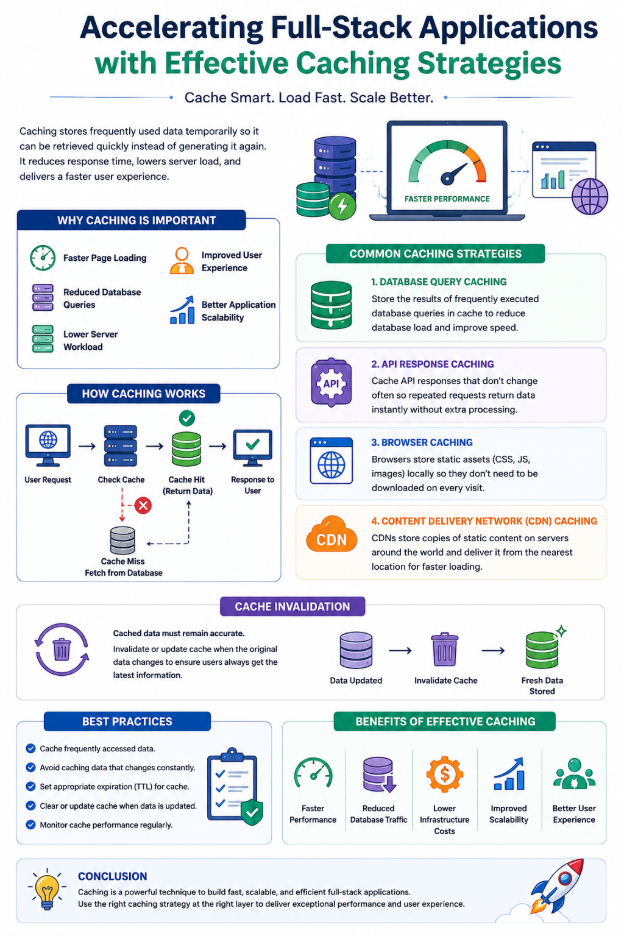
Why Caching Is Important
Effective caching offers several benefits:
- Faster page loading
- Reduced database queries
- Lower server workload
- Improved user experience
- Better application scalability
By minimizing repeated operations, caching allows applications to handle more users efficiently.
Common Caching Strategies
Database Query Caching
Frequently executed database queries can be stored in cache instead of running the same query repeatedly. This significantly reduces database load and speeds up data retrieval.
API Response Caching
API responses that do not change frequently can be cached, allowing repeated requests to return data instantly without additional processing.
This is especially useful for dashboards, reports, and public content.
Browser Caching
Browsers can store static assets such as images, CSS, and JavaScript files locally. When users revisit the application, these files are loaded from the browser cache instead of being downloaded again, resulting in faster page loads.
Content Delivery Network (CDN) Caching
A CDN stores copies of static content on servers located around the world. Users receive content from the nearest server, reducing latency and improving loading speed.
CDN caching is ideal for images, videos, documents, and other static assets.
Cache Invalidation
Caching improves speed, but cached data must remain accurate.
Applications should refresh or remove cached data whenever the original data changes. Proper cache invalidation ensures users always receive updated information while still benefiting from improved performance.
Best Practices
To make caching effective:
- Cache frequently accessed data.
- Avoid caching constantly changing information.
- Set appropriate cache expiration times.
- Clear outdated cache when data is updated.
- Monitor cache performance regularly.
Following these practices helps maintain both speed and data consistency.
Benefits of Effective Caching
A well-designed caching strategy provides:
- Faster application performance
- Reduced database traffic
- Lower infrastructure costs
- Improved scalability
- Better user experience
These benefits become even more valuable as applications grow and user traffic increases.
Conclusion
Caching is one of the simplest yet most powerful techniques for improving the performance of full-stack applications. By reducing unnecessary database queries, optimizing API responses, leveraging browser and CDN caching, and managing cached data effectively, developers can build faster, more scalable, and more reliable applications. Implementing the right caching strategy not only enhances user experience but also ensures efficient use of system resources as applications continue to grow.
