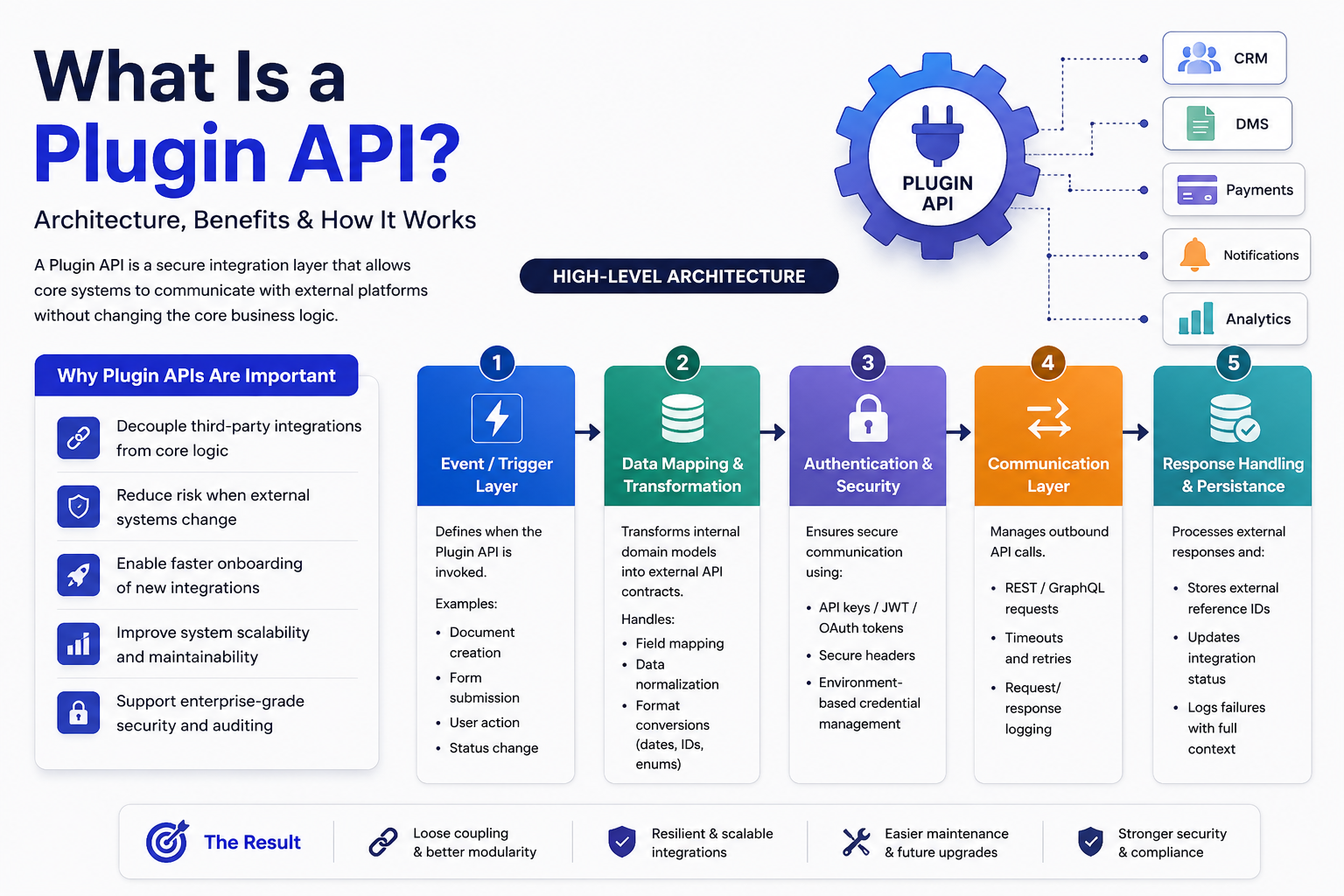
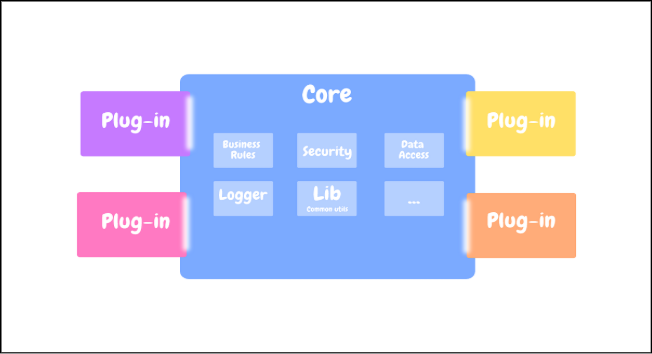
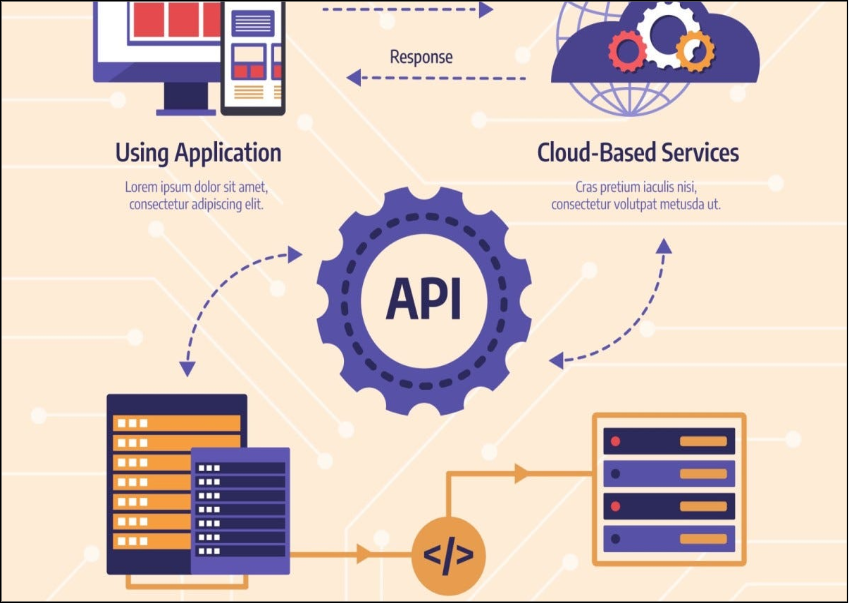
A Plugin API is a dedicated integration interface that enables a core application to securely and reliably communicate with external systems while maintaining strict separation of concerns. It is designed to extend system capabilities without requiring changes to the core business logic, ensuring long-term scalability, maintainability, and architectural consistency.
Plugin APIs are commonly used in enterprise environments to integrate third-party platforms such as CRM systems, document management services, payment providers, notification engines, and analytics tools.
Why Plugin APIs Are Important
From a business and engineering perspective, Plugin APIs help to:
- Decouple third-party integrations from core logic
- Reduce risk when external systems change
- Enable faster onboarding of new integrations
- Improve system scalability and maintainability
- Support enterprise-grade security and auditing
In large-scale systems, this separation is not optional—it is essential.
High-Level Architecture
A typical Plugin API architecture includes the following layers:
️⃣ Event / Trigger Layer
Defines when the Plugin API is invoked.
Examples:
- Document creation
- Form submission
- User action
- Status change
Data Mapping & Transformation
Internal domain models are transformed into external API contracts.
This layer handles:
- Field mapping
- Data normalization
- Format conversions (dates, IDs, enums)
Authentication & Security
Responsible for secure communication using:
- API keys / JWT / OAuth tokens
- Secure headers
- Environment-based credential management
This ensures credentials are never exposed to business logic.
Communication Layer
Manages outbound API calls:
- REST / GraphQL requests
- Timeouts and retries
- Request/response logging
- This layer is designed to be resilient and fault-tolerant.
Response Handling & Persistence
- Processes external responses and:
- Stores external reference IDs
- Updates integration status
- Logs failures with full context
- This guarantees traceability and auditability.