
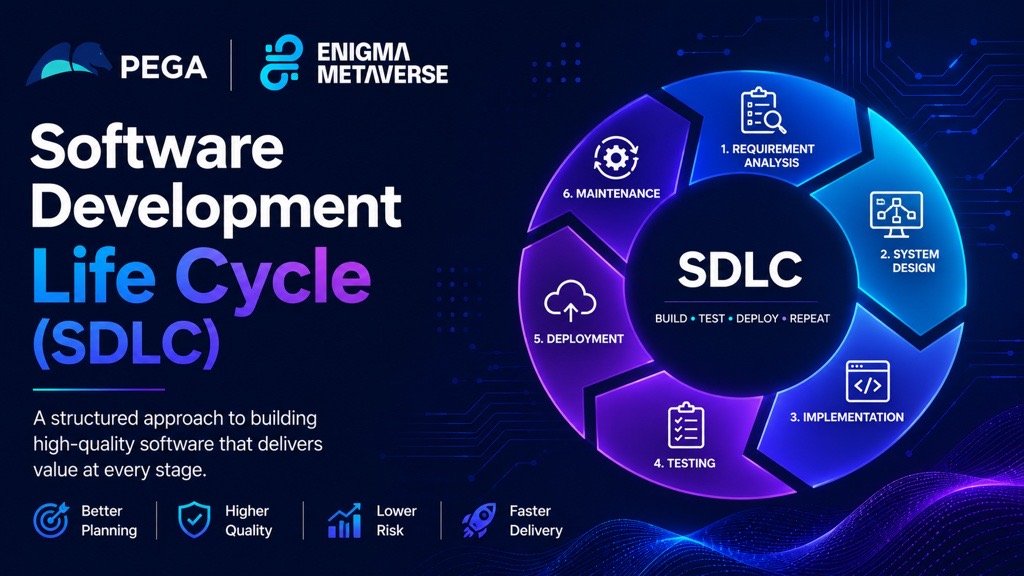
The Software Development Life Cycle (SDLC) is a systematic process followed by software engineers and project teams to deliver high-quality software efficiently. It breaks down software development into clearly defined phases, ensuring transparency, predictability, and continuous improvement.
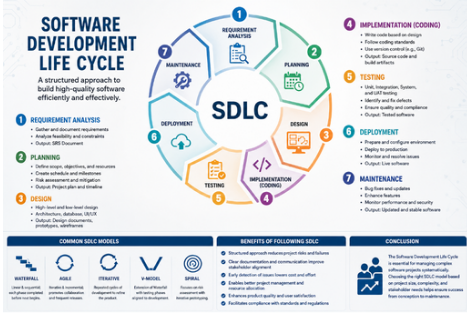
Key Phases of SDLC
1. Requirement Analysis
- Engage stakeholders (clients, users, managers) to gather detailed requirements.
- Document functional and non-functional requirements.
- Analyse feasibility and constraints (technical, budget, timeline).
- Output: Software Requirement Specification (SRS) document.
2. Planning
- Define project scope and objectives.
- Develop resource plan: team roles, technologies, tools.
- Create project schedule with milestones and deadlines.
- Risk assessment and mitigation planning.
- Output: Project plan and timeline.
3. Design
- High-level design: Define system architecture, data flow, and modules.
- Low-level design: Create detailed designs of components, interfaces, and database schema.
- Design user interfaces and user experience flows.
- Output: Design documents, prototypes, and wireframes.
4. Implementation (Coding)
- Developers write code based on design documents.
- Follow coding standards and guidelines.
- Use version control systems (e.g., Git).
- Perform unit testing and peer reviews during development.
- Output: Source code and build artifacts.
5. Testing
- Conduct various types of testing:
- Unit testing
- Integration testing
- System testing
- User Acceptance Testing (UAT)
- Identify, document, and fix defects.
- Ensure the software meets quality standards and requirements.
- Output: Tested software ready for deployment.
6. Deployment
- Prepare deployment environment (servers, cloud, containers).
- Deploy the software to production or release as a product.
- Monitor for deployment issues.
- May include phased rollout or continuous deployment strategies.
- Output: Live software accessible to users.
7. Maintenance
- Provide ongoing support, bug fixes, and updates.
- Enhance features based on user feedback.
- Monitor system performance and security.
- Handle scalability and adaptation to new environments.
- Output: Updated and stable software.
Common SDLC Models
- Waterfall Model: Linear and sequential; each phase completed before next begins. Simple but inflexible.
- Agile Model: Iterative and incremental; promotes collaboration and frequent releases. Flexible and adaptive.
- Iterative Model: Repeated cycles of development to refine the product gradually.
- V-Model: Extension of Waterfall with testing phases aligned to development phases.
- Spiral Model: Focuses on risk assessment with iterative prototyping.
Benefits of Following SDLC
- Structured approach reduces project risks and failures.
- Clear documentation and communication improve stakeholder alignment.
- Early detection of issues lowers cost and effort.
- Enables better project management and resource allocation.
- Enhances product quality and user satisfaction.
- Facilitates compliance with standards and regulations.
Conclusion
The Software Development Life Cycle is essential for managing complex software projects systematically. Choosing the right SDLC model based on project size, complexity, and stakeholder needs helps ensure success from conception to maintenance.
