
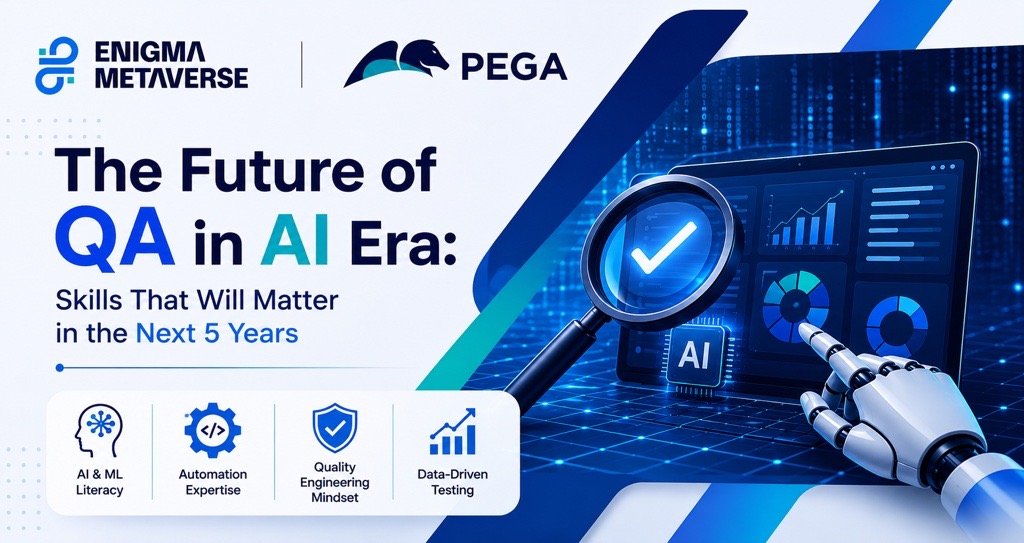
The Quality Assurance landscape is evolving rapidly. As a Quality Engineer, you are already witnessing a shift from traditional test execution toward intelligent, AI-driven quality engineering. The next five years will not just change the tools we use, they will redefine the role of QA itself.
The rise of Artificial Intelligence, Machine Learning, and autonomous systems is transforming how software is developed, tested, and delivered. Organizations are moving towards continuous quality practices where testing is embedded into every phase of the development lifecycle.
So what does this mean for QA professionals? More importantly, what skills should you build today to stay relevant tomorrow?
This article explores the future of QA in the AI era and highlights the key skills that will define successful testers in the next five years.
The Shift from QA to Quality Engineering
Traditionally, QA focused on defect detection. Today, the focus is shifting toward defect prevention and quality ownership across teams.
Key changes include:
- Shift-left and shift-right testing practices
- Increased reliance on automation
- Integration of QA into DevOps and CI CD pipelines
- Use of AI tools for predictive quality insights
QA engineers are no longer just testers. They are becoming quality engineers who:
- Collaborate closely with developers and product teams
- Design intelligent test strategies
- Leverage data for decision making
- Ensure end-to-end system reliability
Why AI is a Game Changer in QA
AI is not replacing QA professionals, but it is significantly changing how they work.
AI-powered tools can:
- Generate test cases automatically
- Predict high-risk areas in applications
- Self-heal automation scripts
- Perform visual and regression testing efficiently
- Analyze large volumes of test data in seconds
For example, tools integrated with platforms like Pega, CDH, or mobile ecosystems such as Android and iOS are increasingly adopting AI-based testing approaches.
This means QA engineers must evolve from manual execution roles to intelligent test designers and automation strategists.
Top Skills QA Professionals Must Build
1. Strong Automation Expertise
Automation is no longer optional. It is a core skill.
Focus areas:
- Selenium, Playwright, Cypress for UI automation
- API automation using REST Assured or Postman
- Mobile automation using Appium for Android and iOS
- Integration with CI CD tools like Jenkins or Azure DevOps
Key insight: Knowing a tool is not enough. Understanding when and what to automate is critical.
2. AI and ML Fundamentals
You do not need to become a data scientist, but understanding AI concepts is essential.
Learn:
- Basics of machine learning models
- Supervised and unsupervised learning
- Test data generation using AI
- AI-driven testing tools
Practical application:
- Using AI tools to generate test cases
- Leveraging predictive analytics to prioritize testing
- Understanding model validation and bias in AI systems
3. API and Microservices Testing
Modern applications rely heavily on APIs and microservices.
Skill requirements:
- API testing strategies
- Contract testing
- Service virtualization
- Understanding of JSON, XML, and HTTP protocols
Why it matters:
- Microservices failures often happen at integration points
- UI testing alone is no longer sufficient
4. DevOps and CI CD Integration
QA must be fully integrated into the DevOps ecosystem.
Learn:
- CI CD pipeline setup and maintenance
- Test automation integration in pipelines
- Docker and containerization basics
- Cloud platforms like Azure, AWS, or Google Cloud
Outcome:
- Faster releases
- Continuous feedback loops
- Improved software quality
5. Data-Driven Testing and Analytics
Data is the backbone of AI-driven QA.
Develop skills in:
- Test data management
- Data analysis using tools like Excel, SQL, or Python
- Understanding logs and monitoring data
- Building dashboards for quality metrics
Example:
Instead of just reporting defects, QA engineers will predict potential failures based on historical data.
6. Security and Performance Testing Awareness
Security and performance are becoming critical aspects of quality.
Focus areas:
- Basic security testing concepts like OWASP Top 10
- Performance testing using tools like JMeter or LoadRunner
- Monitoring system scalability and resilience
QA engineers need to ensure systems are:
- Secure from vulnerabilities
- Able to handle real-world load conditions
7. Domain Knowledge and Business Understanding
Technical skills alone are not enough.
Understanding the business domain is crucial.
For example:
- If you are working on Pega or customer decisioning systems like CDH, understanding customer journeys and decision strategies is important
- In mobile applications, understanding user behavior on Android and iOS platforms is essential
Why this matters:
- Helps in designing meaningful test scenarios
- Improves collaboration with product teams
- Adds value beyond testing
8. Exploratory Testing and Critical Thinking
Even in an AI-driven world, human intuition remains irreplaceable.
Key abilities:
- Exploratory testing
- Risk-based thinking
- Identifying edge cases
- Understanding user experience
AI can help generate tests but cannot fully replace human creativity and intuition.
9. Communication and Collaboration Skills
QA professionals need to communicate effectively across teams.
Develop:
- Clear bug reporting skills
- Ability to explain technical issues to non-technical stakeholders
- Collaboration with developers, product managers, and business teams
In Agile environments like Pega Agile Studio workflows, communication is critical for sprint success.
10. Continuous Learning Mindset
Technology evolves rapidly.
To stay relevant:
- Follow QA trends and communities
- Learn new tools regularly
- Experiment with AI testing platforms
- Take certifications where applicable
Remember:
The QA of tomorrow is a lifelong learner.
Challenges QA Professionals Will Face
While the future is exciting, it comes with challenges:
- Adapting to rapid technological changes
- Learning AI concepts alongside existing responsibilities
- Balancing manual testing with automation
- Keeping pace with evolving tools and frameworks
However, these challenges also present opportunities to grow and lead in the QA space.
What Will QA Look Like in 5 Years?
The QA role will likely evolve into:
- Quality Engineer or SDET roles
- AI-assisted testing specialists
- Quality strategists responsible for end-to-end quality
- Contributors in product design and architecture discussions
Expect:
- Increased automation coverage
- More intelligent testing systems
- Fewer repetitive manual tasks
- Higher focus on quality engineering practices
Action Plan for QA Professionals
If you are a Quality Engineer like yourself, here is a practical roadmap:
Short term (0 to 6 months):
- Strengthen automation skills
- Learn API testing
- Understand CI CD basics
Mid term (6 to 18 months):
- Explore AI testing tools
- Learn basic Python or scripting
- Deepen domain knowledge
Long term (2 to 5 years):
- Build expertise in AI-driven quality engineering
- Lead quality initiatives
- Mentor junior testers
Conclusion
The future of QA is not about replacing humans with AI. It is about augmenting human capabilities with intelligent tools.
The demand for skilled QA professionals will continue to grow, but the expectations will be higher. Those who adapt, learn, and evolve will not only survive but thrive in this new era.
As a QA professional, you have a unique opportunity to position yourself at the center of innovation.
The question is not whether AI will change QA. It already has.
The real question is: Are you ready to evolve with it?
